
 23 AprilFrom İstanbul7 nights
South Korea and Japan Tour
17 April 2027

 6 photos
Fifteen days that bring together South Korea and Japan. Seoul opens with the DMZ, the Hanok village and Gangnam. Tokyo follows with the Meiji Shrine, the slopes of Mount Fuji and Lake Ashi in Hakone, and Kamakura adds its Great Buddha and a tea ceremony.
Fifteen days that bring together South Korea and Japan. Seoul opens with the DMZ, the Hanok village and Gangnam. Tokyo follows with the Meiji Shrine, the slopes of Mount Fuji and Lake Ashi in Hakone, and Kamakura adds its Great Buddha and a tea ceremony. The Shinkansen carries the route through Kobe to Osaka, where Kyoto's Golden Pavilion and the deer of Nara fill a single day. From there the trip runs on to the Peace Memorial in Hiroshima, the old castle town of Kitakyushu and the shrines of Hakata. Flights are with Singapore Airlines from Istanbul. Accommodation, excursions and the meals listed are included.
We meet at 10:00 at the International Departures Terminal of Istanbul Airport and complete ticket and passport formalities. The scheduled Singapore Airlines flight departs for Seoul, the capital of South Korea, with a stopover in Singapore. Flight details: Singapore Airlines, Istanbul (IST) to Singapore (SIN) to Seoul (ICN), 13:30 to 22:15 (+1). Overnight on the plane.
We land in Seoul at 22:15 local time. Entry to South Korea runs on K-ETA pre-approval, with a passport stamp on arrival. After meeting our guide at the airport we transfer to the hotel by private vehicle, check in and stay overnight. Accommodation: Ramada Hotel Seoul Dongdaemun, 4-star or similar.
After breakfast we head to the DMZ, the Demilitarized Zone and one of the most sensitive stretches of Korean history, still monitored by United Nations peacekeeping forces. A passport is required at the entrance and security checks are strict. Our stops inside the DMZ are the Imjingak Peace Bridge, the Freedom Bridge where prisoners of war once returned, and the Korean War Memorial. Our guide explains how the war unfolded, how the peninsula was divided, and the situation today. The area of Kuru-ni, where the Turkish Brigade fought the Chinese People's Volunteer Army, now lies in North Korean territory, and our guide tells that history too. Turkey fought alongside United Nations forces in the Korean War with 15,000 soldiers and lost 721. We return to Seoul at the end of the tour. Meals: Breakfast included. Accommodation: Ramada Hotel Seoul Dongdaemun, 4-star or similar.
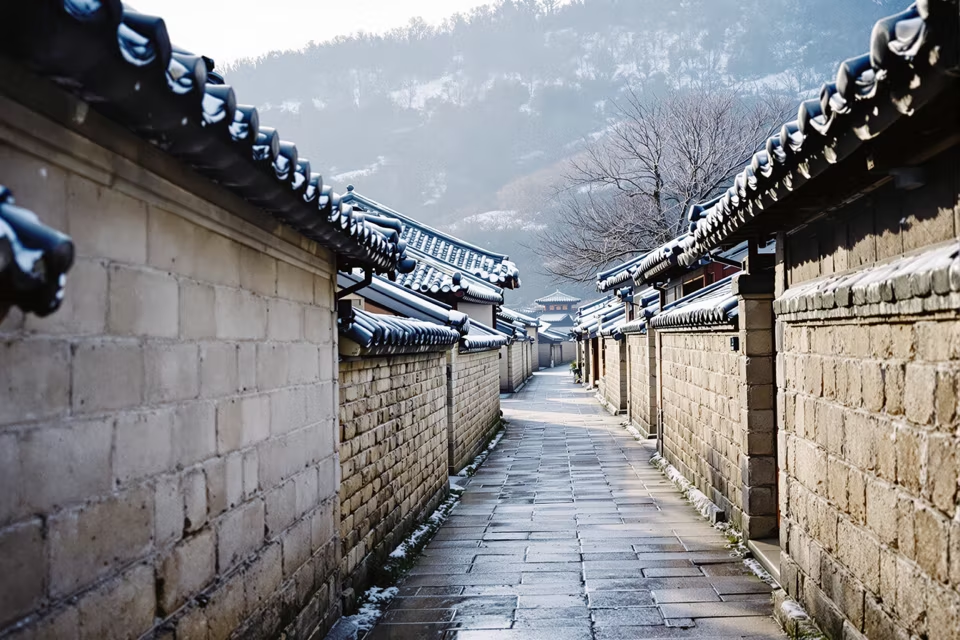
After breakfast we set out on a city tour of Seoul. Namsangol Hanok Village preserves traditional Korean houses from the Joseon dynasty across 7,934 square meters in the Namsan district. From N Seoul Tower on Namsan Mountain, 262 meters up, we take in the panorama of the city, the Han River and the modern skyline. We continue to Gangnam, the district that gained worldwide fame through Psy's Gangnam Style, one of the liveliest streets in Seoul, known for K-pop culture and its large shopping centers. In the free time that follows you can stay on in Gangnam or return to the hotel. Meals: Breakfast included. Accommodation: Ramada Hotel Seoul Dongdaemun, 4-star or similar.
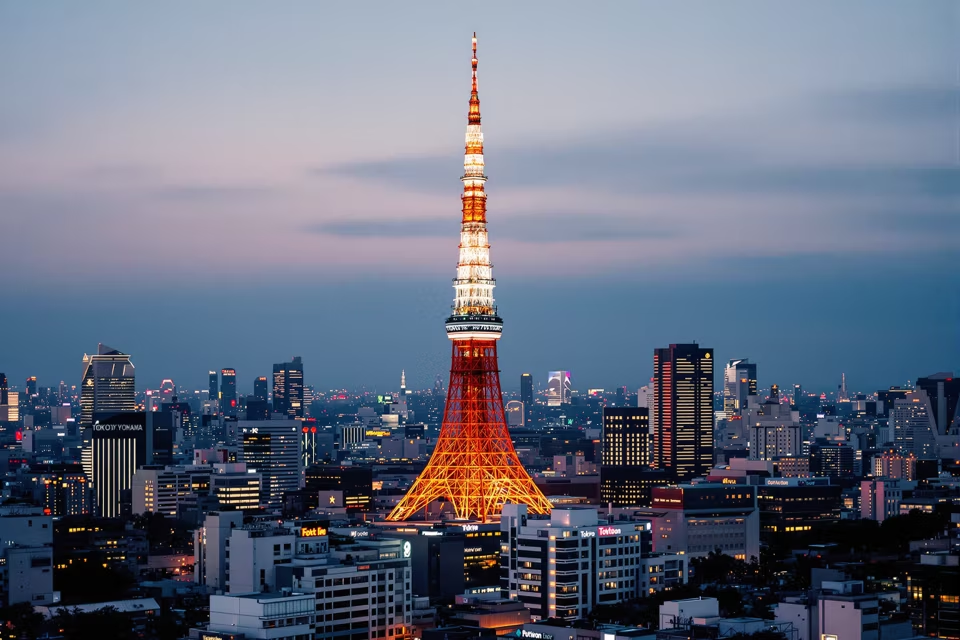
We transfer to the airport early in the morning. Flight details: Jin Air, Seoul/Incheon (ICN) to Tokyo/Narita (NRT), 08:15 to 10:35, direct, 2 hours 20 minutes. Entry to Japan is visa-free, a passport stamp is enough. On arrival in Tokyo we join a half-day city tour. Meiji Jingu Shrine, built to honor Emperor Meiji, stands inside a vast forest at the heart of the city. We take in the panorama from Tokyo Tower and see the National Diet Building, the seat of Japan's parliament, from the outside. A short stop follows on Ginza, Tokyo's most exclusive shopping street. The afternoon is free, for exploring Tokyo's streets, shopping, or trying sushi and ramen. Accommodation: Washington Shibuya, 3-star plus or similar, Tokyo.
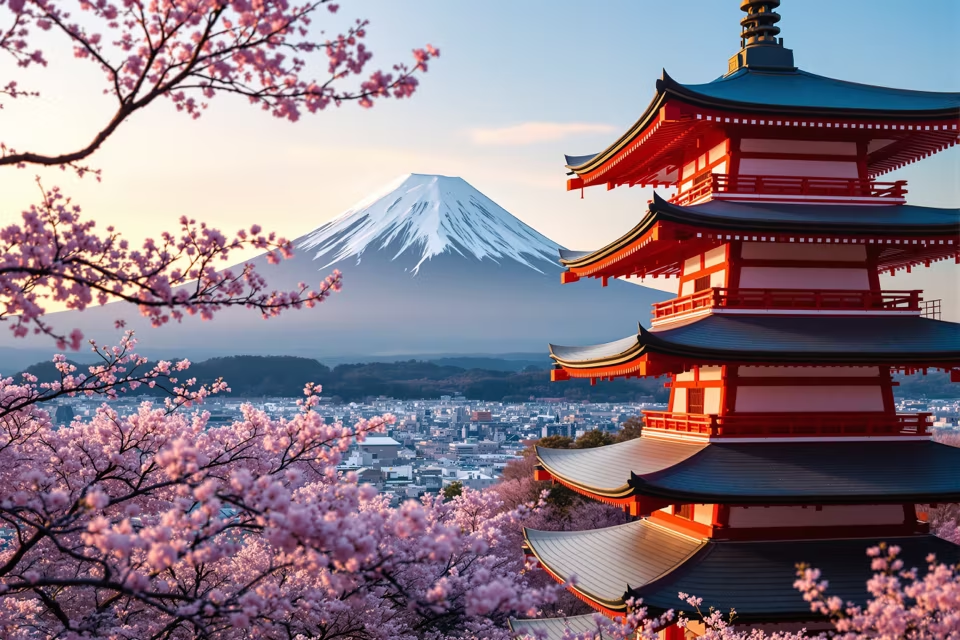
After breakfast we leave by private coach at 07:30 for the Mount Fuji and Hakone region, a full day out of Tokyo. We reach the Fifth Station on Mount Fuji's slopes, at an altitude of 2,300 meters, the highest point accessible by vehicle, for an unobstructed view of the mountain. Lunch brings traditional Japanese cooking. Afterwards we transfer to Lake Ashi, a UNESCO-protected volcanic crater lake ringed by pine forest, for a boat crossing. We return to Tokyo in the evening. Meals: Breakfast and a Japanese lunch included. Accommodation: Washington Shibuya, 3-star plus or similar, Tokyo.
After breakfast we travel from Tokyo to Kamakura, an ancient capital in the Tokyo Bay area known for its history and culture. We see the Great Buddha of Kamakura, a 13th-century bronze statue 13.35 meters tall and the town's best-known symbol. At Hokoku-ji Temple we take part in a traditional tea ceremony with matcha. At the Kamakura bamboo groves we walk in meditative quiet among the bamboo. We return to Tokyo in the evening. Meals: Breakfast included. Accommodation: Washington Shibuya, 3-star plus or similar, Tokyo.
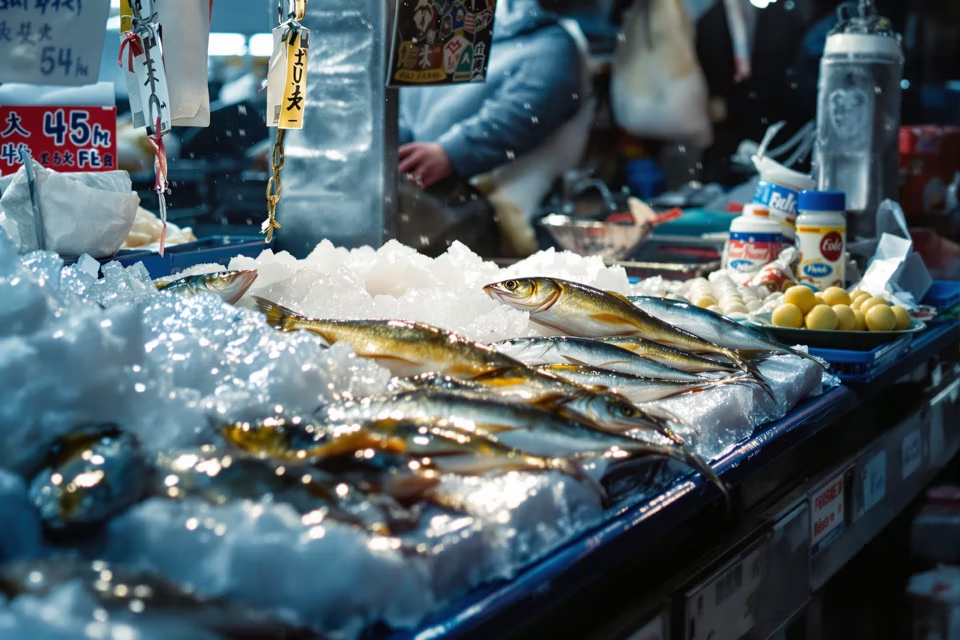
Today is free, to explore Tokyo on your own terms. Suggested stops include Shibuya Crossing, the busiest pedestrian crossing in the world, Shinjuku with its neon lights and nightlife, Senso-ji, Tokyo's oldest temple, in Asakusa, the anime and electronics district of Akihabara, the fashion and youth culture of Harajuku, Tsukiji Fish Market for fresh sushi, and Ueno Park with its museums. Spend the day shopping or seeking out local flavors. Meals: Breakfast included. Accommodation: Washington Shibuya, 3-star plus or similar, Tokyo.
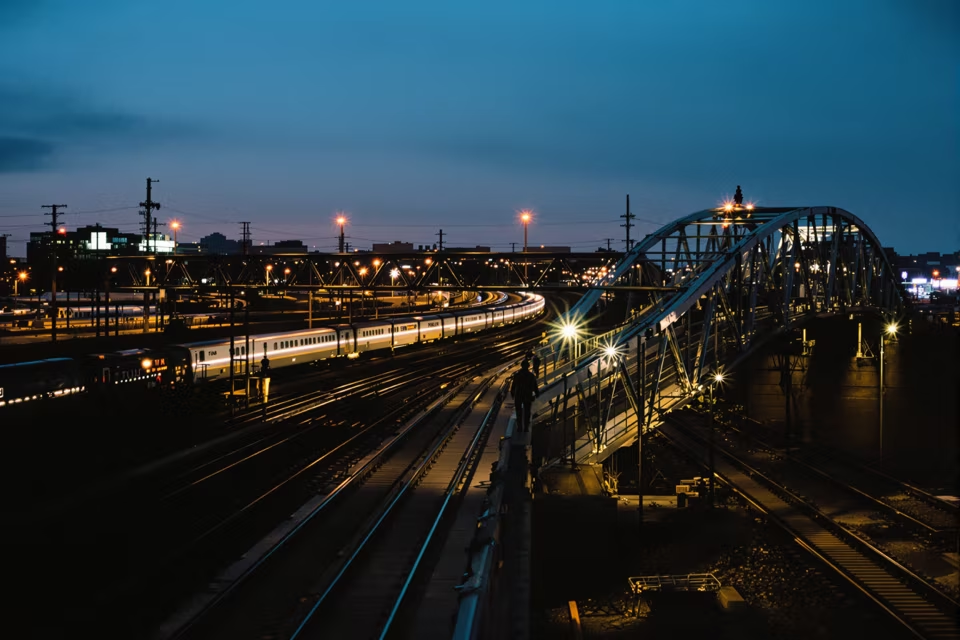
We leave the hotel early and transfer to the station for Japan's famous bullet train, the Shinkansen, to Kobe. Train details: Shinkansen, Tokyo to Kobe, about 2.5 hours at speeds up to 300 km/h. The ride passes through Japan's countryside, mountains and small towns. In Kobe we visit the historic Ikuta Shrine before continuing to Osaka. Meals: Early breakfast included. Accommodation: Noku Osaka or similar.
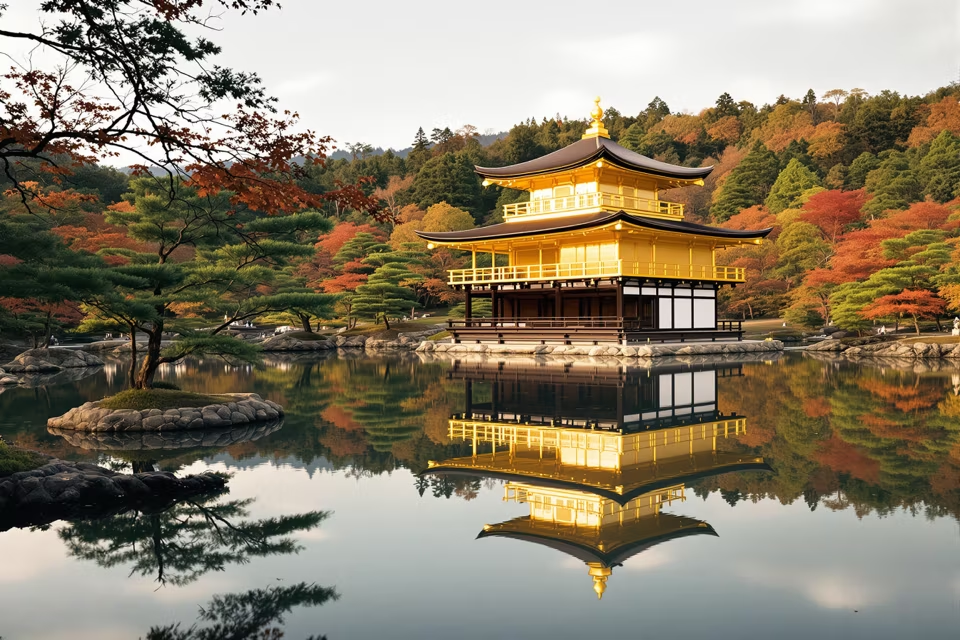
After an early breakfast we travel from Osaka to Kyoto, Japan's former capital and the heart of its traditional culture. Kinkaku-ji, the Golden Pavilion, was built for the shogun Ashikaga Yoshimitsu in the Zen tradition. Its gold-leafed structure and surrounding gardens make it one of the most photographed temples in Japan. After a buffet lunch we continue to Nara, a UNESCO World Heritage site. At Todai-ji Temple stands the Daibutsu, the largest bronze Buddha statue in the world, 15 meters tall and weighing 500 tons. In Nara Park hundreds of deer roam freely, accustomed to visitors; you can feed them and take photographs. We return to Osaka in the evening. Meals: Breakfast and a buffet lunch included. Accommodation: Noku Osaka or similar.
In the morning we travel from Osaka to Hiroshima, a city where historic and modern Japan sit in striking contrast. Hiroshima Castle, originally built in the 1590s, was destroyed by the atomic bomb in the Second World War and rebuilt in 1958; today it houses a museum on the city's history. We view the Atomic Bomb Dome and the Peace Memorial Park area from a distance. Meals: Breakfast included. Accommodation: APA Hotel Hiroshima or similar.
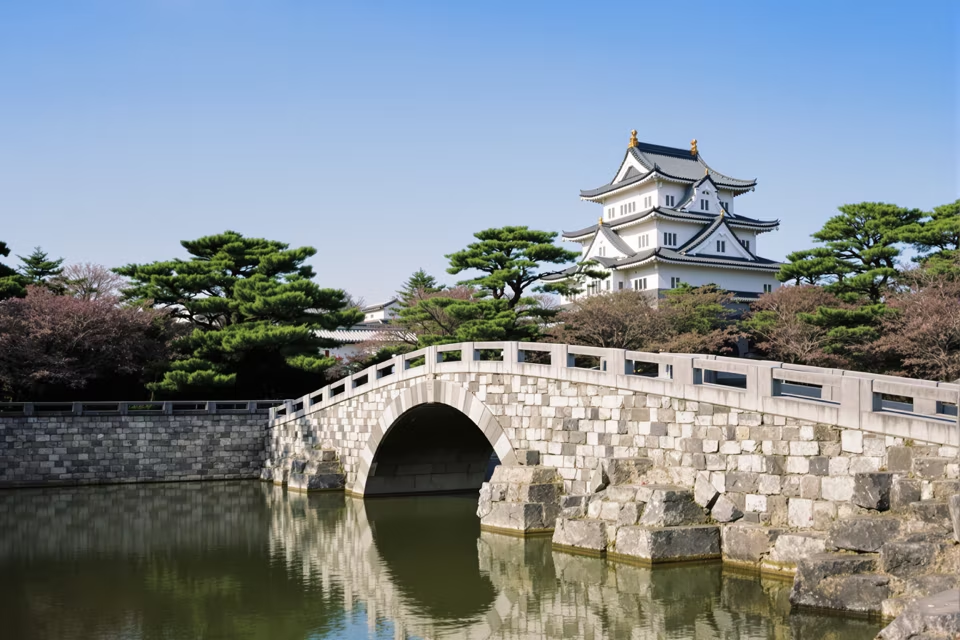
After breakfast we travel to Kitakyushu in Fukuoka Prefecture, a port city with a rich industrial and historical past. Kokura Castle carries the traces of Japan's feudal era, rebuilt several times after the battles it witnessed, and today serves as a museum on the region's history. In the Mojiko Retro district we walk among early 20th-century architecture, an old railway station and port buildings that keep the atmosphere of the period. Meals: Breakfast included. Accommodation: APA Hotel, Kitakyushu.
After breakfast we continue to Hakata, the largest city in Fukuoka. A panoramic city tour introduces Hakata's history and culture. Lunch at a local restaurant brings the city's well-known tonkotsu ramen, mentaiko and motsunabe. We visit Dazaifu Tenman-gu, dedicated to Tenjin, the god of learning, and a shrine especially popular with students hoping for success in exams. The day closes at Kushida Shrine, one of the city's oldest, central to the Hakata festivals. Meals: Breakfast and lunch at a local restaurant included. Accommodation: Fukuoka Bay Hotel, 3-star or similar.
After breakfast we transfer to the airport for the return flight to Istanbul, with a stopover in Singapore. Flight details: Singapore Airlines, Hakata (FUK/HND) to Singapore (SIN) to Istanbul (IST), 09:55 to 07:45 (+1). Overnight on the plane.
We land in Istanbul at 07:45 local time. This 15-day route across two countries comes to an end here: from the K-pop streets of Seoul to the neon lights of Tokyo, from the tension of the DMZ to the history of the Turkish Brigade at Kuru-ni, from the calm of Mount Fuji to the deer of Nara, from the speed of the Shinkansen to the message of peace in Hiroshima.